

Tennis elbow, golfer's elbow and mouse arm are all collective names for conditions that arise from repetitive strain – not just from sports but just as often from computer work, crafts and everyday chores. Together, they affect a large part of the adult population and are one of the most common causes of sick leave among office workers.
In this article, we go over the differences, common causes, which treatments work, and how to prevent recurrence.
Overview - what's what?
Tennis elbow (lateral epicondylitis)
Pain on the outside of the elbow. Due to overloading of the tendons that bend the wrist upwards.
Despite the name – only about 5% is due to tennis. Most people get it from:
- Computer work
- Screwdriving/carpentry
- Repetitive grasping
Golfer's elbow (medial epicondylitis)
Pain on the inside of the elbow. Tendons that bend the wrist downward are inflamed.
Mouse arm
Collective name for various complaints from computer work:
- Tennis/golfer's elbow
- Carpal tunnel syndrome
- Tendonitis
- Muscle knots
- Trigger finger
- Neck-related complaints (read more)
Carpal tunnel syndrome
Compression of the median nerve at the wrist. Causes numbness, tingling and weakness in the thumb, index and middle finger. A form of nerve pain.
Symptoms
Tennis elbow
- Pain on the outside of the elbow
- Worsened by gripping (shaking hands, lifting a coffee cup)
- Morning stiffness
- Weakness in the wrist
- May radiate down the forearm
Golfer's elbow
- Pain inside of the elbow
- Worsened when bending the wrist
- Sensation of weakness when grasping
Carpal tunnel syndrome
- Numbness in the thumb, index, middle and half of the ring finger
- Worst at night – wakes up with tingling
- Weakness in thumb grip
- "Lose things" more often
- Shakes hand for relief
Mouse arm in general
- Fatigue in forearm after working day
- Pain during repetitive movements
- Stiffness in the morning
- Reduced function in the hand
Causes
Work-related
- Computer use with poor ergonomics
- Prolonged keyboard or mouse work
- Repetitive grips or twisting movements
- Craft professions
Sports
- Tennis (backhand)
- Golf
- Martial arts
- Climbing
Other causes
- Screwdriving and carpentry
- Prolonged driving
- Pregnancy (carpal tunnel syndrome)
- Diabetes, thyroid disorder
When should you seek care?
Contact a doctor if you:
- Have pain for over 4-6 weeks despite rest
- Have numbness or tingling in fingers
- Have weakness that affects everyday grip
- Are unable to work normally
- Have pain that wakes you up at night
- Notice atrophy (muscle reduction) in the hand
Investigation
- Clinical examination – specific tests for each condition
- Cozen's test – tennis elbow
- Reverse Cozen's – golfer's elbow
- Tinel's and Phalen's – carpal tunnel syndrome
- Ultrasound – shows tendon thickness, inflammation, nerve entrapment
- Neurography (EMG) – in case of suspected carpal tunnel syndrome
- MRI in unclear cases
- X-ray in case of suspected skeletal problems
Treatment
Acute phase – reduce load and calm irritation
- Reduce or adapt the provocative activity
- NSAID (ibuprofen, naproxen) – short term
- Ice after activity
- Orthosis/elbow brace – if needed
- For carpal tunnel: night splint that keeps the wrist straight
Physiotherapy – the basis for persistent symptoms
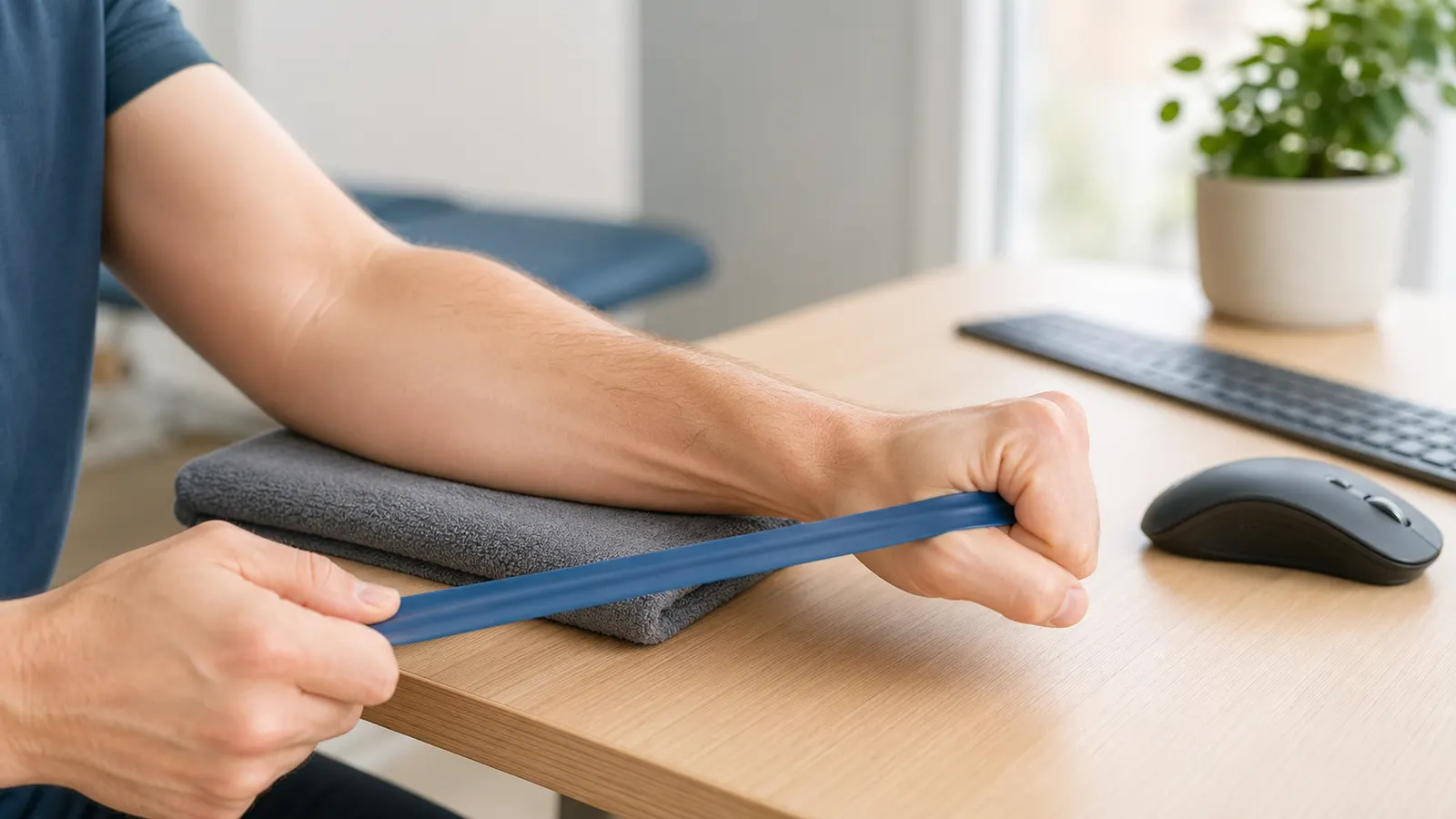
- Eccentric training – proven effective for tennis elbow
- Stretching of forearm muscles
- Strength building in the entire kinesiological chain
- Ergonomic assessment and workplace adaptation
Advanced treatment
- Shock wave treatment (ESWT) – in case of chronic epicondylitis
- Cortisone injection – short-term effect, used sparingly
- PRP injection – platelets for healing
- Dry needling or acupuncture
Carpal tunnel – specific
- Night splint – first choice treatment
- Cortisone injection – good effect
- Surgery (ligament release) – in severe cases or neurological deficits
Surgery
Rarely for tennis/golfer's elbow but relevant if:
- 6–12 months of conservative treatment not helped
- Pronounced functional failure
- Carpal tunnel syndrome with neurological deficits
Self-help and prevention
Ergonomics – the basics
- Correct desk height
- Neutral wrist position for keyboard/mouse
- Switch between right and left mousing sometimes
- Ergonomic mouse for recurring problems
- At least one break every 30 min
Stretching
Daily, even without symptoms:
- Wrist up/down with outstretched arm
- Stretch finger extensors (rotate wrist inwards, bend fingers)
- Stretch finger flexors (rotate wrist outwards, stretch fingers)
Strength building
- Grip strength (rubber ball, dumbbell)
- Eccentric forearm training
- Neck/shoulder stability
General
- Good sleep promotes healing
- Stress increases muscle tension
- Exercise in general
Frequently asked questions (FAQ)
Does tennis elbow go away on its own?
Often yes – but can take 6-24 months. With structured rehab, it goes much faster, usually 6–12 weeks.
Does cortisone injection help?
Short-term yes, but long-term effect is often worse than physiotherapy. Most often used for pronounced pain that prevents rehab.
Do I have to stop working?
Rarely necessary. It is usually enough to adapt the workplace and take regular breaks.
What is the difference between mouse arm and tennis elbow?
Tennis elbow is a specific condition (lateral epicondylitis). Mouse arm is an umbrella term that can include tennis elbow, carpal tunnel syndrome, tendonitis and more.
Can carpal tunnel syndrome go away without surgery?
Mild cases - yes, with a night splint and ergonomics. Moderate cases often improve with cortisone. Pronounced cases with neurological deficits need surgery.
Do I need a referral?
No. At Scandinavian Health Clinic you book directly without a referral.
Can you train with tennis elbow?
Yes, but adapted. Avoid provocative movements (grips, wrist flexion) and focus on eccentric exercise which can speed up healing. A physiotherapist can provide a tailored program.
Which ergonomic change makes the most difference in mouse arm?
Neutral wrist position – the wrist should neither bend up nor down when using the keyboard and mouse. Vertical "ergonomic" mouse helps many. Read more about ergonomics at work.
Summary
Tennis elbow, golfer's elbow, mouse arm and carpal tunnel syndrome are all treatable – but require the right diagnosis for the right treatment. Early intervention shortens rehab dramatically.
Book an appointment with a specialist at the Scandinavian Health Clinic in Mölndal - without a referral, with a short waiting time and just minutes from central Gothenburg.
📞 +46 (0) 10-147 77 40 ✉️ [email protected]
Book an appointment - contact us → Pain & Orthopedics → Read about ergonomics → Read about shoulder pain → Read about neck pain → Read about nerve pain → Read about chronic pain →


