

Nerve pain – or neuropathic pain – feels completely different from regular muscle or joint pain. It is often burning, stinging, or stabbing, and common pain relievers rarely help. Up to 8% of the population has some form of nerve pain – but it is often underdiagnosed and mistreated.
In this article, we go over what nerve pain is, common causes, how it differs from other pain and how it can be treated effectively.
What is nerve pain?
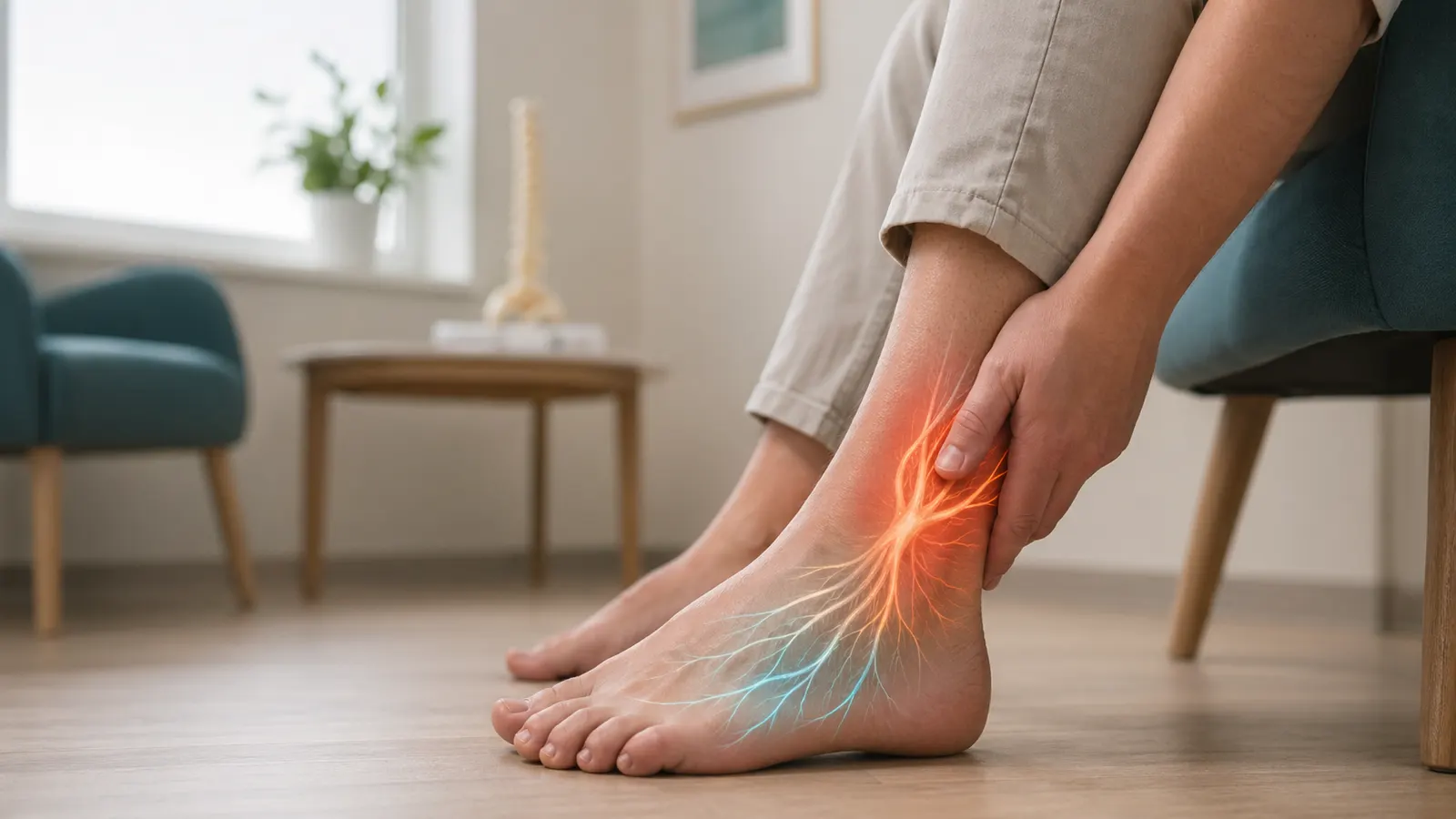
Nerve pain occurs when the nervous system itself – peripheral nerves, spinal cord or brain – is damaged or malfunctions. Unlike "ordinary" pain (nociceptive pain) which signals tissue damage, nerve pain is caused by the nervous system sending incorrect pain signals.
Nerve pain vs. muscle pain
| Muscle/joint pain | Nerve pain | |
|---|---|---|
| Feeling | Pressing, grinding, sore | Burning, stinging, stabbing |
| Location | At the damage | Along the path of the nerve |
| Trigger | Movement, load | Often spontaneous, even at rest |
| NSAID response | Often good | Rarely effective |
| Accompanying symptoms | Stiffness | Numbness, tingling, loss of sensation |
Typical symptoms
Nerve pain is often described as:
- Burning – like fire or heat
- Stinging – like stabbing
- Electric shock-like – sudden flashes of pain
- Radiating – travels along a nerve
- Numbness – together with the pain
- Tingling – pins and needles
- Allodynia – ordinary touch is perceived as painful (eg the shirt against the skin)
- Hyperalgesia – excessive pain reaction
Many describe it as "having shoes that are too tight" even when they are not - or that "skin is overheated".
Common causes
1. Nerve entrapment
When a nerve is pinched by surrounding tissue:
- Sciatica – L5/S1 nerve
- Herniated disc
- Carpal tunnel syndrome – the median nerve at the wrist
- Cubital tunnel syndrome – the ulnar nerve at the elbow
- Nerve root impact in neck
2. Diabetic neuropathy
Long-term diabetes damages peripheral nerves, usually in the feet and legs. Burning nocturnal pain is typical.
3. Postherpetic neuralgia
After shingles, nerve pain may persist for months or years where the rash was.
4. Trigeminal neuralgia
Intense, electric shock-like pain attacks in the face. Very disabling.
5. CRPS (Complex Regional Pain Syndrome)
Unusual but serious. Develops after injury, usually in the arm or leg.
6. After surgery or trauma
Nerve damage during surgery or an accident can cause permanent nerve pain.
7. Phantom pain
After amputation.
8. Chemotherapy-related neuropathy
Some cancer drugs damage nerves.
9. Multiple Sclerosis (MS)
Damage to the myelin sheath in the central nervous system.
10. Fibromyalgia
Although technically a central pain syndrome, it has neuropathic elements. Read more about fibromyalgia.
When should you seek help?
Contact a doctor if you have:
- Burning or stabbing pain for over 2 weeks
- Pain that radiates along a nerve
- Numbness along with the pain
- Weakness in arm or leg
- Pain that wakes you up at night
- Pain that does not respond to regular painkillers
Emergency care for:
- Sudden paralysis
- Loss of urine/faeces control (cauda equina)
- Numbness in the breeches area
Diagnosis
Clinical examination
- Neurological examination – reflexes, sensation, power
- Specific tests for nerve entrapment
- Identification of propagation along the pathways of the nerves
Image diagnostics
- MRI if a herniated disc or spinal cord injury is suspected
- Neurography/EMG – measures the electrical function of the nerves
Blood samples
- Diabetes (HbA1c)
- B12, folate
- Thyroid status
- Inflammation
Treatment
Nerve pain requires other drugs than muscle pain - NSAIDs and paracetamol usually do not help.
Medicines
- Gabapentin or pregabalin – first choice treatment
- Duloxetine (SNRI) – good for diabetic neuropathy
- Amitriptyline – low dose in the evening
- Tramadol – in more severe cases
- Carbamazepine – for trigeminal neuralgia
- Local drugs – lidocaine patch, capsaicin
Interventional treatment
- Nerve blocks – local anesthetic around the nerve
- Steroid injections
- Spinal cord stimulation – in case of severe chronic nerve pain
Physiotherapy
- Specific training for nerve entrapment
- Softening treatment
- Ergonomics (read about ergonomics)
Treat the root cause
- Surgery for severe nerve entrapment
- Blood sugar control in diabetic neuropathy
- Treatment of shingles early
Complementary treatments
- TENS (electrical nerve stimulation)
- Acupuncture
- CBT for long-term pain
Self-help
- Good Sleep – poor sleep worsens nerve pain
- Stress management – stress lowers pain threshold
- Regular exercise – adapted to the pain
- Avoid alcohol in large quantities
- Quit smoking – nicotine impairs nerve healing
- Blood sugar control if you have diabetes
Frequently asked questions (FAQ)
How do I distinguish nerve pain from regular pain?
Nerve pain feels burning, stinging or electric shock-like - and often follows the path of the nerve. Common painkillers rarely help. Muscle pain is pressing, worsens with movement and responds well to NSAIDs.
Is nerve pain dangerous?
The nerve pain itself is not dangerous, but the cause may be (eg severe disc compression with risk of paralysis). Therefore, it is important to seek care for a diagnosis.
Can nerve pain go away by itself?
Sometimes, during short-term pinching. But long-term nerve pain tends to get worse without treatment. Early treatment improves the prognosis.
Why does Alvedon not help with nerve pain?
Paracetamol and NSAIDs act on inflammation and muscle pain. Nerve pain occurs in the nervous system itself and requires medications that affect nerve signaling (gabapentin, duloxetine, etc.).
Is nerve pain chronic?
Some forms are – others are temporary. With the right treatment, even chronic nerve pain can be significantly alleviated.
Do I need a referral?
No. At Scandinavian Health Clinic you book directly without a referral.
Can nerve pain heal completely?
In case of short-term pinching (eg mild carpal tunnel syndrome) often yes. With longer nerve damage, full recovery is more difficult, but relief is almost always possible. Early treatment gives the best prognosis.
Which doctors treat nerve pain?
Neurologist, orthopedic/pain doctor and anesthesiologist are the most common. At the Scandinavian Health Clinic, specialists work together so you get a combined assessment.
Summary
Nerve pain is a disease category of its own that requires specific diagnosis and treatment. Using the wrong medication or the wrong treatment is a common cause of unnecessary suffering. The right investigation almost always leads to improvement.
Book an appointment with a specialist at the Scandinavian Health Clinic in Mölndal - without a referral, with a short waiting time and just minutes from central Gothenburg.
📞 +46 (0) 10-147 77 40 ✉️ [email protected]
Make an appointment - contact us → Pain management → Neurology → Read about sciatica → Read about herniated disc → Read about chronic pain → Read about fibromyalgia →


