

Anxiety and worry is one of the most common mental health problems in Sweden - approximately every fourth person is affected at some point in their life. But anxiety isn't just "in the head" – it creates severe physical symptoms that are often misinterpreted as heart disease, stomach upset or neurological problems.
In this article we go through different forms of anxiety, how it manifests itself in the body, the connection to stress and physical pain, and which treatments actually work.
What is anxiety?
Anxiety is the body's reaction to perceived danger - an overactive warning system that makes itself felt even when there is no real danger. It is closely related to stress but differs in that it often lacks a clear external cause.
Different forms of anxiety
- Generalized anxiety disorder (GAD) – constant worry in everyday life
- Panic disorder – intense attacks with physical symptoms
- Social anxiety – fear of social situations
- Health anxiety – excessive worry about illness
- Phobia – strong fear of specific objects or situations
- Obsessive compulsive disorder (OCD) – compulsive thoughts and rituals
- Post-traumatic stress disorder (PTSD) – after trauma
Symptoms of anxiety
Anxiety manifests itself both psychologically and strongly physically - often people seek a doctor for the physical symptoms without knowing that anxiety is the basis.
Physical symptoms
- Palpitations and fast pulse
- Shortness of breath or feeling of not getting air
- Press on the chest
- Nausea and upset stomach
- Dizziness and fainting sensation
- Tingles in the hands or around the mouth
- Shivering
- Sweating
- Muscle tension and aches (neck pain, back pain)
- Headache (read more)
- Sleep problems (read more)
Mental symptoms
- Constant worry
- Catastrophic thoughts
- Concentration difficulties
- Irritability
- Feeling of unreality
- Fear of "going crazy" or dying
Behavioral symptoms
- Avoidance of situations
- Social withdrawal
- Increased alcohol or drug use
- Procrastination
How anxiety affects the body
Anxiety activates the fight-or-flight system. The body thinks it has to flee or fight – but there is nothing to escape from, so the reaction has no outlet:
- Chronic tense muscles → muscle pain
- Raised cortisol levels → lowered immune system
- Poor sleep → fatigue and lowered pain threshold
- Hyperventilation → dizziness, tingling, shortness of breath
- Stomach discomfort → IBS, nausea
Prolonged anxiety can lead to exhaustion syndrome and chronic pain.
Common causes
- Genetic vulnerability – anxiety often runs in families
- Prolonged stress – job, relationships, finances
- Trauma – both new and old
- Illness – own or a loved one's
- Life events – divorce, death
- Substances – too much caffeine, alcohol, drugs
- Hormonal changes
Panic disorder – when the anxiety becomes explosive
Panic attacks are sudden, intense anxiety attacks that peak within 10 minutes.
Typical symptoms:
- Heart palpitations
- Shortness of breath
- Chest pain
- Dizziness
- Fear of dying or losing control
The first panic attack is often experienced as a heart attack. Emergency hospital visits are common – when the investigation shows "nothing wrong" many feel relief, but also frustration.
Panic attacks are harmless but very unpleasant. They are treatable with both CBT and medications.
When should you seek help?
Contact a doctor if you:
- Has daily anxiety that affects everyday life
- Having panic attacks
- Avoids situations due to anxiety
- Has physical symptoms that do not go away (palpitations, headache, stomach upset)
- Sleeps poorly due to anxiety
- Uses alcohol or drugs to suppress anxiety
- Has dejection along with anxiety
Treatment of anxiety
CBT (cognitive behavioral therapy)
First choice treatment for most forms of anxiety. Strong scientific support, long-lasting effect, no side effects. Focuses on thought patterns and behavior change.
Exposure therapy
Particularly effective for phobias, panic disorder and PTSD. Successive exposure to what creates anxiety in a safe environment.
Medicines
- SSRI – antidepressants that also work great for anxiety
- SNRI – alternative if needed
- Benzodiazepines – short term only (risk of addiction)
Lifestyle
- Exercise – proven as effective as medication for mild anxiety
- Sleep – always prioritize (read more)
- Caffeine reduction – big difference for many
- Mindfulness and meditation
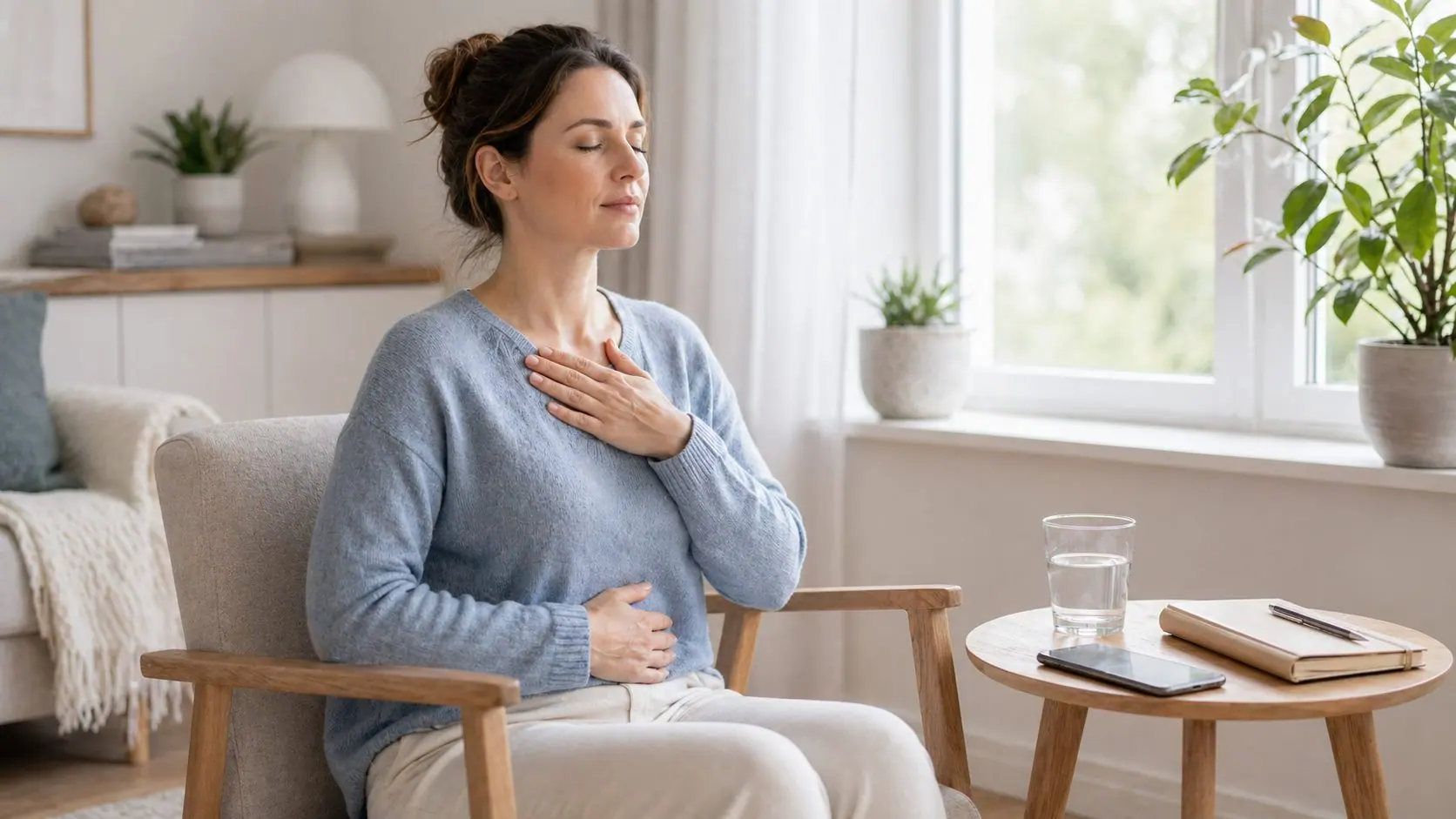
- Breathing exercises – especially against panic attacks
Medical investigation
A general practitioner can rule out other causes – thyroid disorder, heart rhythm disorder, blood pressure problem – and assess the need for medication or therapy referral.
Self-help – what you can do now
- Breathing exercise – the 4-7-8 technique for anxiety peaks
- Reduce caffeine – can make a huge difference
- Regular exercise – 150 min/week
- Prioritize sleep
- Limit alcohol
- Social contacts – isolation worsens
- Talk to someone – shame makes it worse, help makes it easier
Frequently asked questions (FAQ)
Can anxiety cause physical symptoms without psychological ones?
Yes. Many people experience heart palpitations, dizziness, stomach upset or headaches without feeling anxious – the body shows the anxiety before the mind does.
How do you distinguish anxiety from stress?
Stress usually has an external cause and disappears when the cause does. Anxiety can persist without a clear external cause and is more persistent. They reinforce each other.
Are panic attacks dangerous?
No, they are physiologically harmless - even if they are perceived as life-threatening. They peak within 10 minutes and then disappear. But they need to be treated.
Does CBT really help?
Yes. CBT has strong scientific support for almost all forms of anxiety, often as good or better than medications, with longer lasting effects.
Can you be free from anxiety?
Yes. Many become completely free, others learn to manage it so that it does not rule their lives. Early treatment gives the best results.
Do I need a referral?
No. At Scandinavian Health Clinic, you book directly with a general practitioner without a referral.
What do you do in case of an acute panic attack?
Focus on breathing (the 4-7-8 technique: inhale for 4 seconds, hold for 7 seconds, exhale for 8 seconds). Remind yourself that the attack culminates within 10 minutes and is physiologically harmless. Seek quiet environment if possible.
Can caffeine make anxiety worse?
Yes. Caffeine activates the same nervous system as anxiety – it can cause palpitations, nervousness and trigger panic attacks in sensitive people. Try to reduce to a maximum of 1-2 cups per day.
Summary
Anxiety is common but very treatable. Physical symptoms such as palpitations, headaches and stomach upsets are often the body's way of showing anxiety – not separate illnesses. With the right help, you can regain control of your life.
Book an appointment with a specialist at the Scandinavian Health Clinic in Mölndal - without a referral, with a short waiting time and just minutes from central Gothenburg.
📞 +46 (0) 10-147 77 40 ✉️ [email protected]
Make an appointment - contact us → General medicine → Neurology → Read about stress → Read about sleep problems → Read about burnout → Read about headaches every day → Read about body pain →


